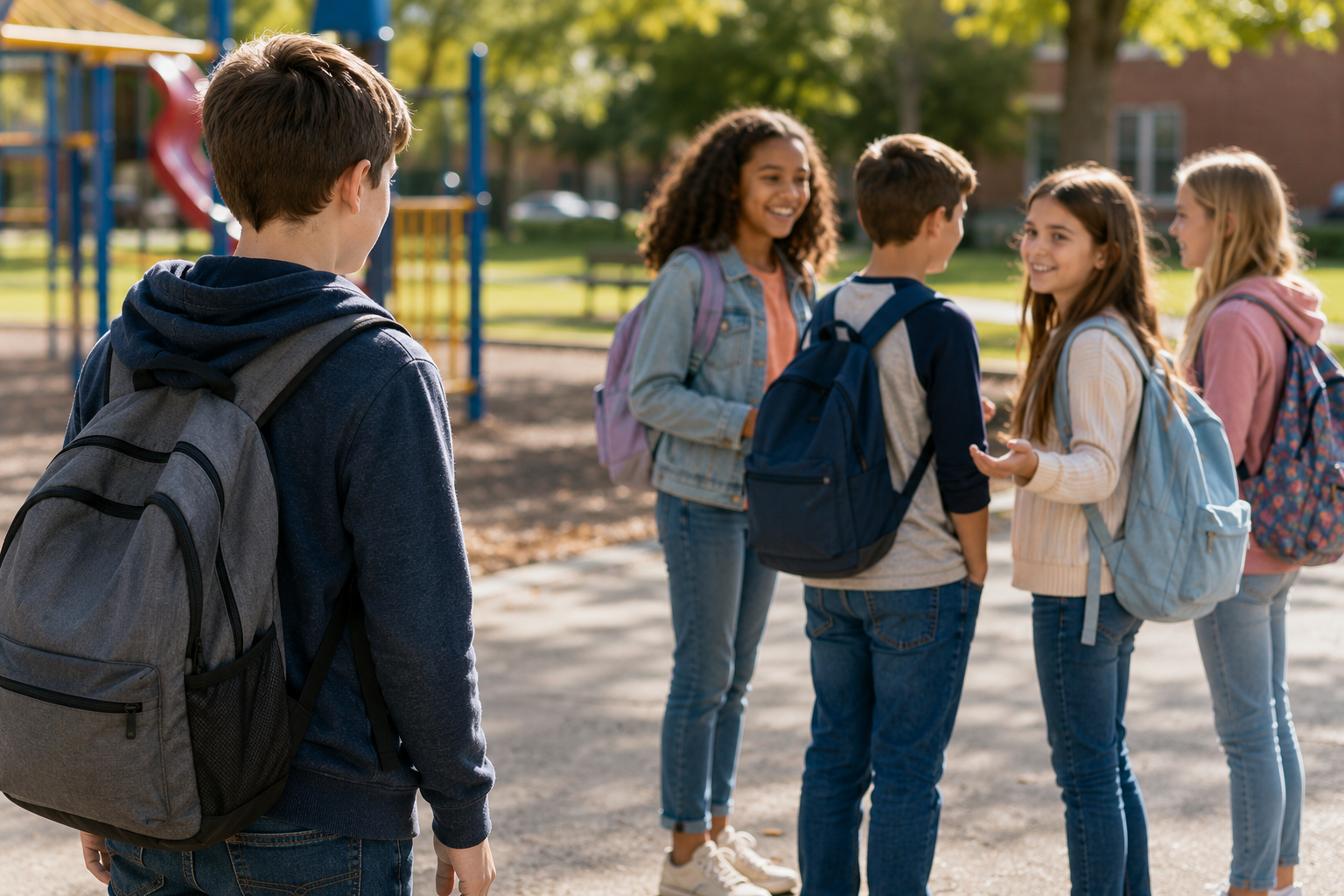
Watching someone stand on the edge of a group, wanting to join in but not knowing how, can be one of the hardest moments for a family member to experience. If you’ve ever found yourself wondering why making friends seems so difficult for your learner, you’re certainly not alone. Whether it’s at school, a birthday party, church, a community event, or even a family gathering, many families are looking for ways to help their learner build the confidence to connect with others.
When people search for advice about making friends, they often find suggestions like joining clubs, arranging playdates, participating in community activities, or finding others with similar interests. Those are all wonderful opportunities, and they absolutely have value.
However, opportunities alone don’t automatically build friendships.
Many families work incredibly hard to find opportunities for their learner to meet new people, and those opportunities are important. But simply placing someone in a social setting doesn’t automatically teach the skills needed to build friendships. Learners still need to know how to start a conversation, keep it going, recognize another person’s interests, and respond when the conversation changes. Those foundational skills often need to be taught intentionally, practiced repeatedly, and reinforced over time.
For many neurodivergent learners, the biggest challenge isn’t finding people to be around. It’s knowing what to do once they’re there.
Why Is It So Hard to Make Friends?
Many learners don’t struggle because they don’t want friends. They struggle because no one has ever intentionally taught them the many small skills that friendships are built upon.
Friendships grow through dozens of smaller interactions that happen over time. Learning how to start a conversation, take turns speaking, listen to another person’s ideas, ask thoughtful questions, find shared interests, recognize social cues, know when to change the subject, and work through small misunderstandings are all skills that can be taught and practiced.
These are all teachable skills.
Like learning to ride a bicycle or cook a new recipe, friendship skills become stronger with instruction, practice, encouragement, and repetition.
Building the Skills That Help Make Friends
One of the biggest misconceptions is believing that simply placing someone in a social setting will naturally lead to friendships.
While community activities, clubs, sports, youth groups, and other programs create valuable opportunities, they don’t automatically teach the skills needed to build relationships.
Imagine handing someone a basketball without ever teaching them how to dribble, pass, or shoot. Being on the court creates an opportunity, but learning the game requires practice.
Friendships work much the same way.
At WonderKids, our Conversations Module intentionally breaks social communication into individual skills that learners can practice one step at a time. Rather than expecting someone to master every part of friendship at once, we focus on helping them become more confident with each individual skill before adding another.
Over time, those individual skills begin working together to support stronger, more meaningful relationships.
Why Making Friends Takes Practice
Another challenge many neurodivergent learners experience is that success with one familiar person doesn’t always mean those same skills will naturally transfer to someone new. A learner may have wonderful conversations with a grandparent, sibling, cousin, or longtime family friend because those relationships have developed over many years. Family members often understand the learner’s communication style and naturally adapt conversations to keep them going.
Meeting a new classmate, teammate, neighbor, or peer requires using those same communication skills in an entirely different situation. Those new friends don’t yet know the learner’s communication style, favorite topics, or routines. Helping learners practice with different people and in different settings is one of the ways confidence continues to grow.
That’s why practicing friendship skills in different situations is so important.
The more opportunities learners have to practice with different people, in different places, and during different activities, the more those skills begin to feel natural and transferable.
Learning how to greet one person today may become the foundation for greeting someone new tomorrow.
This idea is supported by the Pennsylvania Autism Services, Education, Resources and Training (ASERT) initiative, which emphasizes that social skills are most effective when they are taught directly and practiced across a variety of people, settings, and everyday situations.
Finding Common Interests Builds Friendships
One of the easiest ways friendships begin is through shared interests.
Whether someone enjoys trains, video games, animals, music, cooking, sports, drawing, or collecting something unique, common interests often become the starting point for meaningful conversations.
The goal isn’t to stop talking about favorite interests.
The goal is learning how to invite someone else into the conversation.
That might mean asking another person what they enjoy, taking turns sharing ideas, noticing when someone seems interested, or recognizing when it’s time to ask a question instead of continuing to talk.
These small adjustments often make conversations feel more balanced, creating opportunities for friendships to grow naturally.
Building friendships also means learning to notice facial expressions, body language, tone of voice, and other social cues that help us better understand how another person may be feeling. Those important skills are explored throughout the Social Awareness Module, helping learners become more confident in a variety of social situations.
If your learner enjoys talking about one favorite topic, you may also enjoy reading Why Does My Child Only Talk About One Thing? Learning how to share a favorite interest while also inviting someone else into the conversation is an important step toward building lasting friendships.
If speaking out of turn or blurting also makes conversations more difficult, our article Why Does My Child Blurt Things Out? offers additional strategies that can help learners build stronger communication skills.
Practicing Friendship Skills at Home
Families often tell us that finding opportunities to practice can be difficult. Transportation, busy schedules, limited community programs, or living in areas with fewer inclusive activities can all make social experiences harder to come by.
Those challenges are real, and they aren’t a reflection of a family’s commitment or effort.
That’s one reason practicing at home can be so valuable.
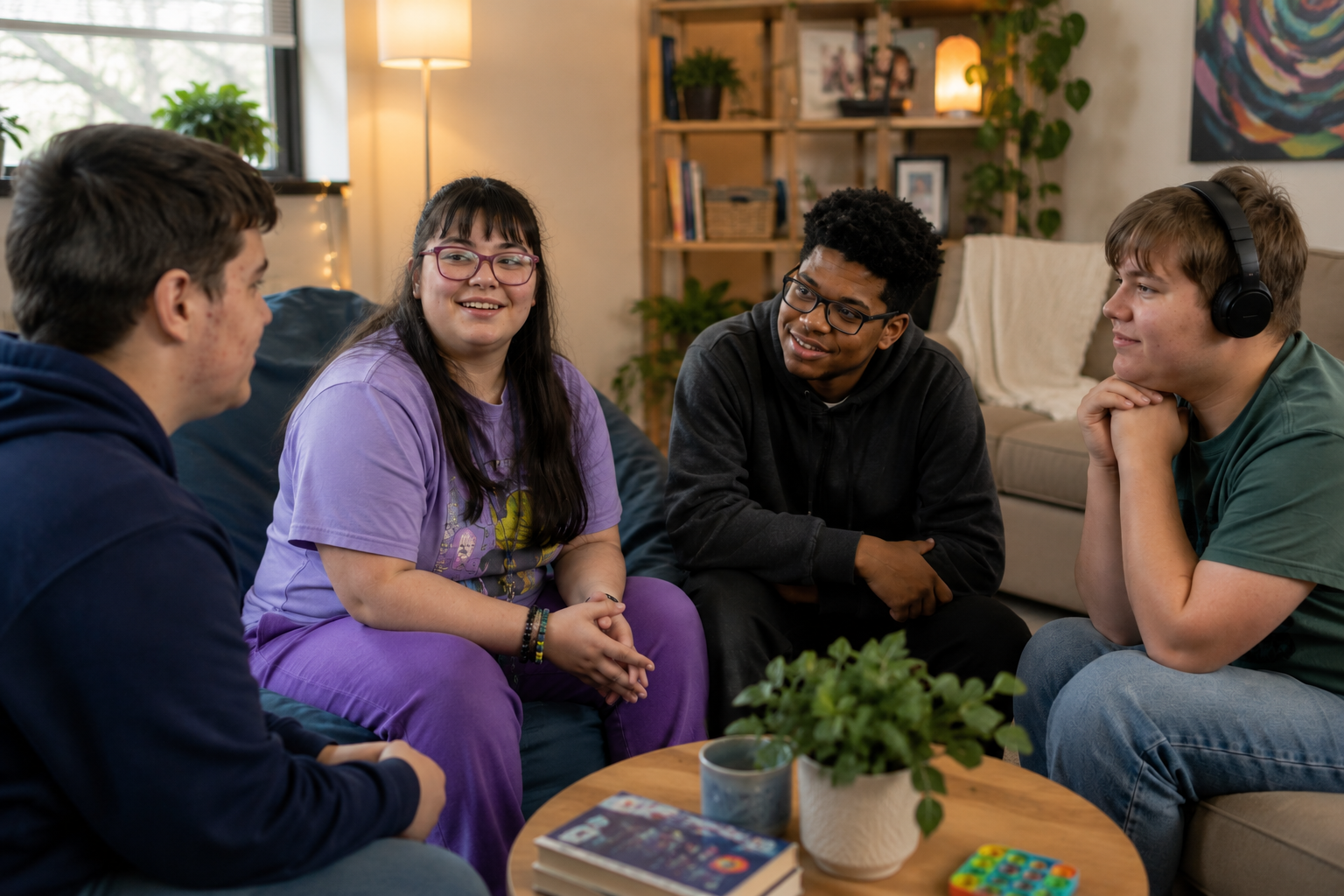
Everyday conversations can become meaningful opportunities to build confidence. That might happen around the dinner table, during errands, while playing games, or through simple role plays. These moments allow learners to practice new skills in a familiar environment before trying them in the community.
Positive encouragement also makes a tremendous difference.
When you notice a learner asking a thoughtful question, taking turns during a conversation, introducing themselves, showing interest in someone else’s ideas, or successfully working through a small social challenge, celebrate it. Those moments deserve recognition because they are the building blocks of future friendships.
As confidence grows, families can gradually step back and allow learners to use these developing skills more independently while continuing to provide encouragement and support. The goal isn’t perfection. The goal is helping learners become increasingly confident in using their skills with less support over time.
One Skill at a Time
It’s completely understandable to hope friendships happen quickly.
Every family wants to see the people they care about feel accepted, connected, and included.
But friendships aren’t one skill.
They’re built from many smaller skills that develop over time.
It’s easy to want everything to happen at once. Every family hopes to see meaningful friendships develop, and that hope comes from a place of caring. But friendships aren’t built all at once. They grow one skill at a time, one conversation at a time, and one positive experience at a time.
That’s why WonderKids intentionally breaks social communication into manageable pieces. Each lesson builds upon the one before it, allowing learners to strengthen individual skills that eventually come together to support meaningful relationships.
Progress may happen one conversation at a time, but every conversation matters.
Helping Learners Build Lasting Friendships
Helping someone build lasting friendships isn’t about finding the perfect activity or waiting for the perfect opportunity.
It’s about helping them develop the confidence and communication skills that allow relationships to grow wherever opportunities arise.
The Conversations Module teaches learners how to start conversations, take turns, ask questions, listen, and keep conversations going. Those skills are strengthened even further through the Social Awareness Module, where learners develop a better understanding of social cues, perspective taking, and recognizing how other people may be thinking or feeling.
If you’re wondering what practicing these skills actually looks like, watch a free sample lesson to see how WonderKids combines engaging video instruction with guided practice activities that families can complete together at home.
You can also learn more about WonderKids to explore each module and discover how our step-by-step approach helps learners build confidence, strengthen communication, and develop meaningful friendships over time.
After all, friendships aren’t built overnight.
Every conversation a learner practices today creates another opportunity to build confidence tomorrow. At WonderKids, we focus on teaching one skill at a time because meaningful friendships aren’t built overnight. They’re built through practice, encouragement, and the confidence that grows with every conversation.