Understanding why conversations can be challenging and how you can help
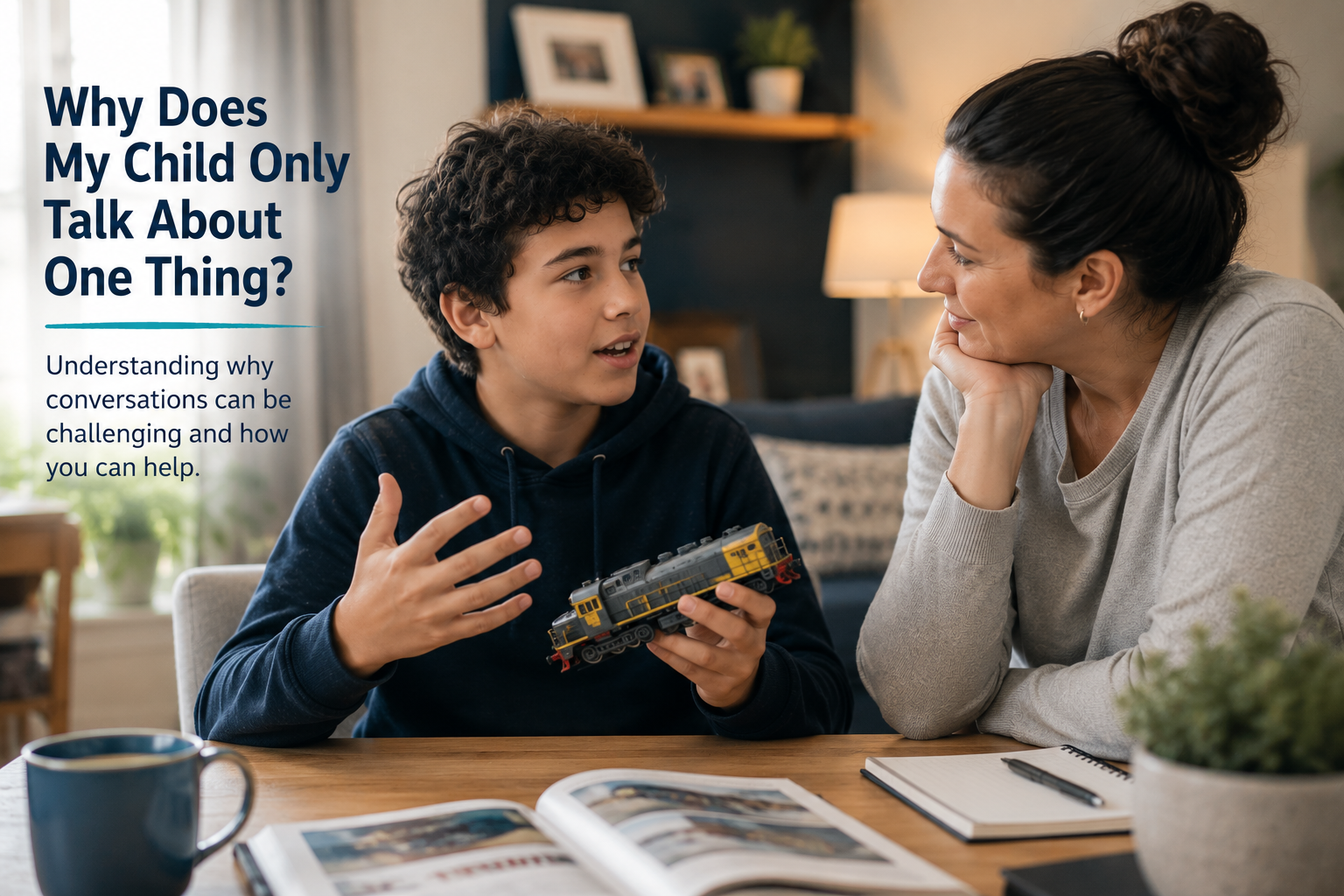
If you’ve been asking yourself, “Why does my child only talk about one thing?” you’re certainly not alone. It’s one of the most common questions parents and caregivers ask when they’re trying to better understand conversation skills. One of the greatest gifts many individuals have is their ability to become deeply interested in something they truly enjoy. Whether it’s dinosaurs, weather, elevators, animals, video games, history, maps, or a favorite television show, their excitement can be contagious. They often notice details that others miss and remember information that amazes the people around them.
Then something happens.
They begin sharing that favorite topic with someone else. After a few minutes, the other person starts looking around the room, checking their phone, or trying to end the conversation. Sometimes your child doesn’t notice. Other times, they may simply lose interest and walk away when the conversation shifts to something else.
As a parent or caregiver, those moments can be difficult. You may wonder if your child will ever feel comfortable having conversations, if they’ll be able to build meaningful friendships, or if other people will take the time to truly understand them.
If you’ve ever felt that way, you’re not alone.
The encouraging news is that conversation is a skill. Like many skills, it can be learned, practiced, and strengthened over time.
One of the most important things to remember is this:
A conversation isn’t something one person gives. It’s something two people build together.
Why Does My Child Only Talk About One Thing? Talking and Having a Conversation Are Not Always the Same Thing
Many people can talk comfortably about the things they enjoy. Having a conversation, however, involves a different set of skills.
A conversation means noticing when someone else would like to speak. It means asking questions, listening to another person’s ideas, recognizing when someone may be confused or losing interest, and understanding that both people should have an opportunity to share.
For some individuals, those skills don’t develop naturally. That doesn’t mean they can’t learn them. It simply means they may need more direct instruction, more opportunities to practice, and encouragement along the way.
Think about something you’ve learned as an adult. Maybe it was using a new computer program at work, cooking a favorite recipe, driving somewhere unfamiliar, or learning how to use a new phone. None of those skills happened overnight. They became easier through practice, repetition, and experience.
Conversation skills often develop the same way. They aren’t always simply “picked up.” Many people benefit from having those skills taught, practiced, and reinforced in everyday life. If you’re interested in learning more about how communication skills develop, the American Speech-Language-Hearing Association offers helpful information for families.
It’s Not About Changing Who Your Child Is
One of the biggest misconceptions about conversation skills is that the goal is to stop someone from talking about the things they enjoy.
That’s not the goal at all.
Those interests are often a source of joy, confidence, learning, and connection. They deserve to be celebrated.
The goal is to help your child discover that meaningful conversations grow when both people feel heard. Sometimes that means talking about a favorite interest. Other times, it means becoming curious about what someone else enjoys too.
Those small moments of give and take are often where friendships begin.
Small Steps You Can Practice at Home
You don’t have to wait for a special class or social group to begin building conversation skills. Everyday moments provide wonderful opportunities to practice together.
You might try:
- Taking turns sharing one interesting thing about your day during dinner.
- Asking one follow up question before changing the topic.
- Practicing conversations during a car ride or while taking a walk.
- Celebrating when your child notices someone else’s interests or asks a thoughtful question.
- Keeping practice fun and encouraging rather than focusing on getting everything “right.”
Progress often happens one conversation at a time.
One Thing to Remember
If conversations feel difficult right now, it doesn’t mean they always will.
Every meaningful relationship is built through communication, and communication is made up of skills that can be learned, practiced, and strengthened over time.
Your child doesn’t need to become someone different to continue growing. They deserve opportunities to build confidence, social awareness, and communication skills that allow them to participate in conversations and relationships in ways that are meaningful to them.
If you’ve wondered why your child only talks about one thing, remember that this behavior doesn’t define who they are. With guidance, practice, and encouragement, conversation skills can continue to grow over time.
How WonderKids Can Help
At WonderKids, we believe every individual deserves the opportunity to build meaningful relationships while remaining true to who they are. Through engaging lessons, real life scenarios, visual supports, interactive activities, and opportunities to practice, WonderKids helps individuals strengthen communication, social awareness, self advocacy, and everyday life skills in ways that are practical, encouraging, and meaningful.
Whether your goal is helping your child feel more confident in conversations, build friendships, or simply participate more comfortably in everyday interactions, every small step forward is worth celebrating.
Ready to explore WonderKids? Learn how our engaging lessons help families build communication, confidence, and everyday social skills.