Finding practical tools that help learners build skills through modeling, repetition, practice, and everyday experiences
If you have ever searched for social skills resources for children with autism, you already know there is no shortage of information.
Videos. Worksheets. Apps. Activities. Programs. Books. Social media posts. Advice about what you should be doing and what you shouldn’t be doing.
The challenge usually isn’t finding something.
It’s figuring out what might actually be useful for the person you care about.
After years of supporting children, teens, young adults, and families through Wesley Family Services and our in person WonderKids program, we have learned something important: meaningful skills usually aren’t learned because someone explained them once.
Learners need opportunities to see a skill, understand it, practice it, revisit it, and eventually use it in their own lives.
That thinking helped shape WonderKids Digital, an online curriculum designed to help learners build social, emotional, communication, self advocacy, and everyday life skills through structured lessons they can use at their own pace.
So, whether you choose WonderKids or another resource, what should you actually be looking for?
Look for Social Skills Resources That Break Big Skills Into Manageable Pieces
Sometimes we talk about social skills as though they are one thing.
“Make a friend.”
“Have a conversation.”
“Ask for help.”
“Be flexible.”
“Speak up for yourself.”
Those instructions may sound simple, but think about everything that can be hiding underneath them.
Making a friend can involve recognizing someone you might want to talk to, starting a conversation, listening, finding common interests, taking turns, understanding social cues, ending a conversation, and then knowing what to do the next time you see that person.
That’s a lot.
I sometimes think about it like learning a sport. We wouldn’t hand someone a basketball, point toward the court, and assume that being around the game will automatically teach them how to dribble, pass, shoot, and understand every rule.
Being on the court creates an opportunity.
Learning the game takes instruction and practice.
Social learning can work the same way.
Strong social skills resources for children with autism should help take larger ideas and make them easier to understand and practice one piece at a time.
That is why WonderKids is organized around individual skills across four areas: Conversations, Social Awareness, Self Management, and Self Advocacy. Families can start with the skills that are most meaningful to their learner rather than feeling like everything needs to be addressed at once.
Look for Social Skills Resources That Show, Not Just Tell
Think about how many things you have learned because someone showed you how to do them.
Reading directions can certainly help. Having someone explain something can help too. But sometimes we need to actually see what something looks like.
This can be especially important when we are teaching social situations.
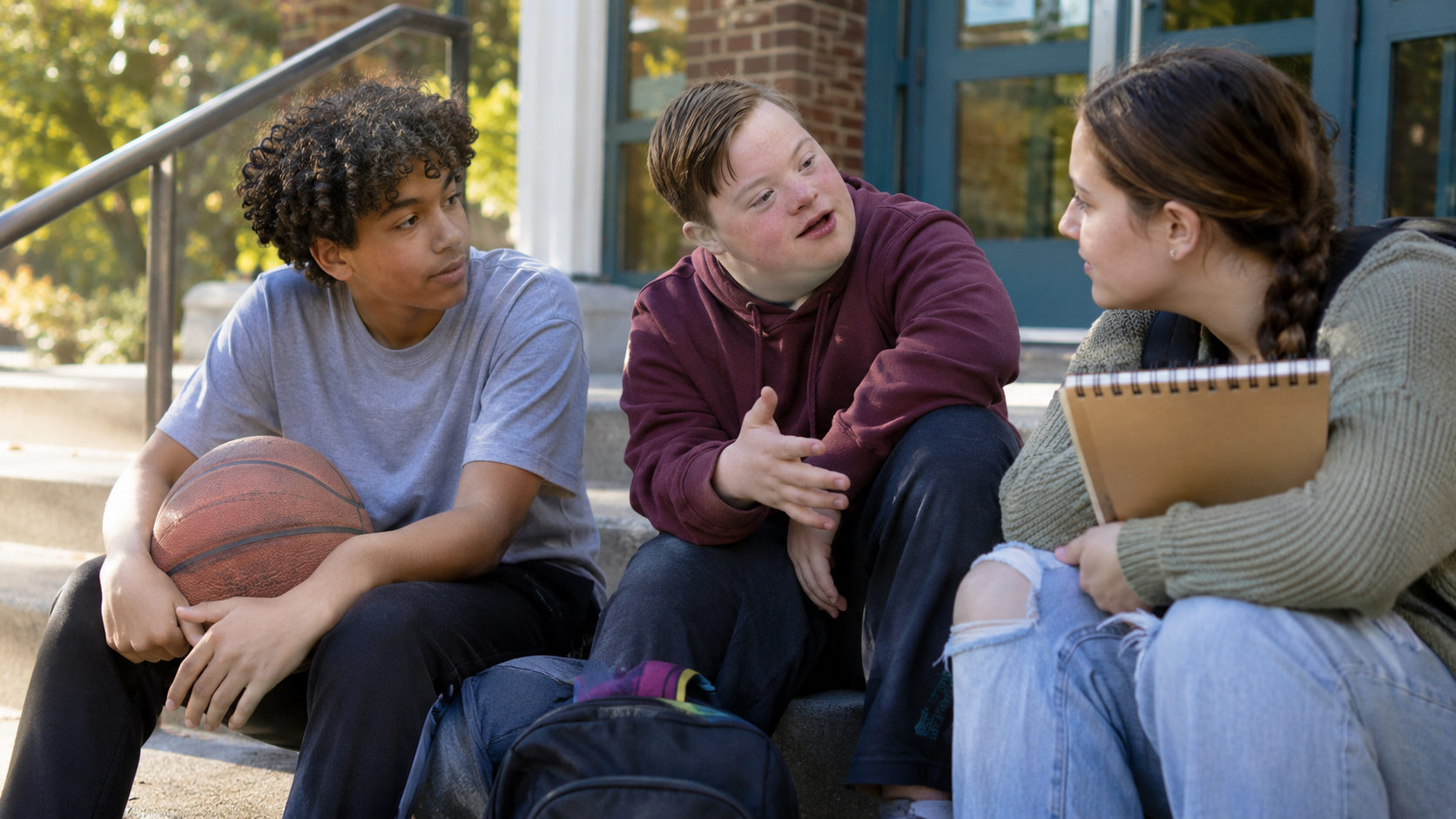
What does joining a conversation actually look like?
What might someone’s face or body language tell us?
How could someone ask for help?
What are some ways a person might respond when a plan unexpectedly changes?
WonderKids uses animation, video modeling, visual supports, relatable stories, real life examples, and both successful and unsuccessful choices to make these concepts more concrete. Learners aren’t only told what a skill means. They get opportunities to see situations unfold and think about what could happen next.
There is research behind many of these teaching approaches. The National Clearinghouse on Autism Evidence and Practice’s review of evidence based practices for autistic children, youth, and young adults identifies practices including video modeling, visual supports, social skills training, parent implemented intervention, task analysis, and technology aided instruction and intervention.
That doesn’t mean every learner learns in exactly the same way.
It does mean there is good reason to look for resources that do more than simply tell someone what they should do.
Look for Repetition Without Pressure
Here’s another thing we’ve learned over the years: one time is often not enough.
And really, why would it be?
Adults revisit information all the time. We reread directions. We watch the instructional video again. We practice something until it becomes more comfortable. Sometimes we even return to a skill we thought we had mastered because we haven’t used it in a while.
Learners deserve that same opportunity.
One of the reasons WonderKids Digital was designed to be self paced is because learning doesn’t happen according to a stopwatch.
Pause a lesson.
Replay part of it.
Practice a skill.
Come back tomorrow.
Return to the same lesson a few weeks later when something happens at school or in the community that suddenly makes the lesson much more relevant.
There is no prize for finishing WonderKids quickly. The goal is learning, not completion.
Families who want to see how that works can take a look inside WonderKids and watch a real lesson preview. The preview shows how stories, real world examples, visual supports, repetition, and opportunities to think through choices are built into the learning experience.
Look for Ways Families Can Be Part of the Learning
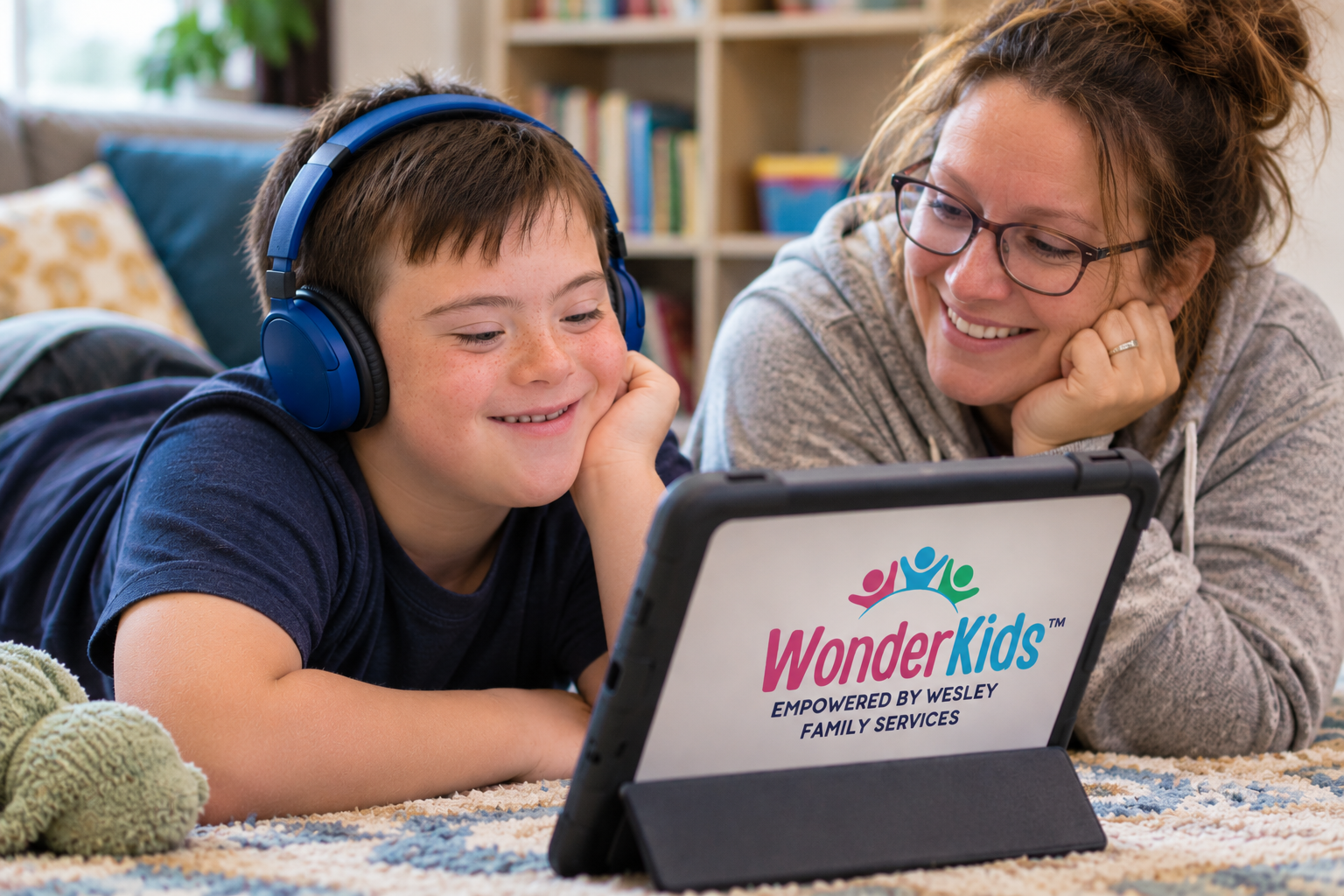
Digital learning does not have to mean putting someone in front of a screen and walking away.
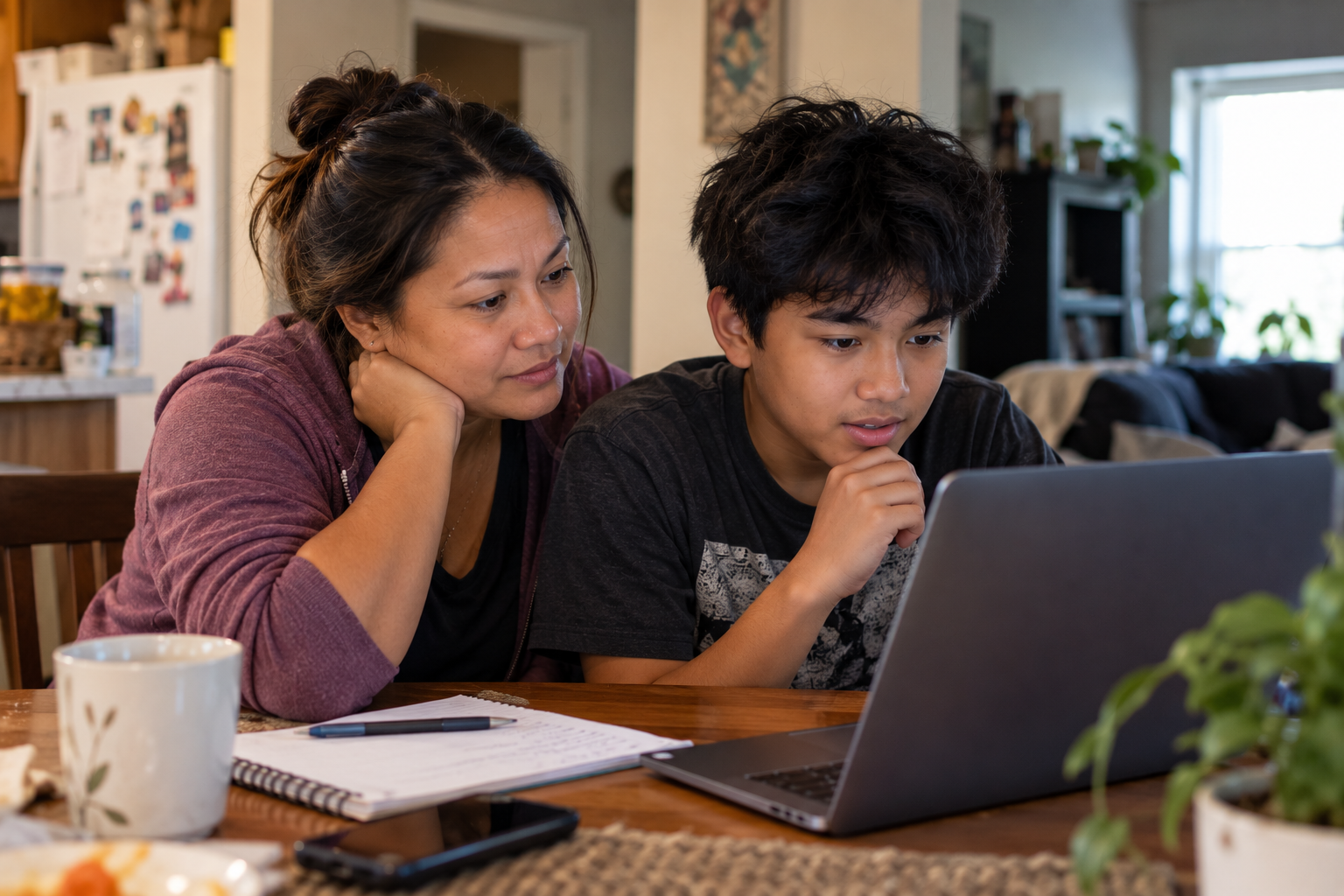
Some learners may be ready to work through lessons more independently. Others may benefit from having a parent, caregiver, sibling, teacher, or another trusted person participate with them.
Both are okay.
What matters is what happens with the skill afterward.
Maybe you watched a lesson about asking for help together. Two days later, your learner is struggling with homework and you can say, “Remember when we talked about how we can let someone know we need help?”
Perhaps the lesson was about dealing with change. Then a weekend plan unexpectedly changes and you have a real opportunity to connect what was practiced to what is happening right now.
That’s where family engagement can become incredibly valuable.
It also creates consistency. When the important people in a learner’s life understand what they are practicing, they can use similar language, reinforce the same concepts, and notice opportunities to practice outside of the lesson.
We explored this idea in How Can I Help My Child Learn to Ask for Help at School?, where a skill practiced at home can be reinforced with teachers and other members of a learner’s support team.
Look for Learning That Goes Beyond the Screen
This may be the most important piece.
The goal isn’t being really good at WonderKids.
The goal is using the skills when they matter.
It might mean asking for help when something is confusing.
Maybe it’s recognizing when someone wants to end a conversation.
It could be handling an unexpected change with a little more confidence, telling someone when something feels uncomfortable, recognizing a facial expression, joining a conversation, or advocating for what you need.
The screen is where we can teach and practice. Life is where the skill matters.
That’s why strong social skills resources should create opportunities for families to take what is being taught and connect it to everyday situations.
If flexibility and unexpected changes are particularly difficult for your learner, Child Upset When Plans Change? What Families Can Do includes practical ways families can take that skill beyond a lesson and into everyday life.
If understanding other people is the challenge, our article Why Doesn’t My Child Pick Up on Social Cues? explores how facial expressions, body language, conversation cues, and perspective taking can be taught and practiced too.
The more a learner experiences a skill with different people, in different places, and during different situations, the more opportunities they have to understand when and how that skill might be useful. That’s an important thing to consider when choosing social skills resources for children with autism.
Look for Resources That Respect the Learner
This matters to me.
Social skills instruction shouldn’t be about creating one “right” way to communicate, interact, or experience the world.
Different learners communicate differently. They have different personalities, interests, strengths, challenges, comfort levels, and ways of connecting with other people.
The goal shouldn’t be to take those differences away.
For us, the goal is to give learners more information, more strategies, and more choices.
Sometimes that means understanding how another person may interpret a social situation.
Sometimes it means learning another way to communicate a thought.
At other times, it means recognizing that something doesn’t feel right and knowing how to speak up, ask for help, or set a boundary.
We recently talked about that distinction in Why Does My Child Say Things That Hurt Other People’s Feelings? Learning how our words may affect someone else is important, but that should never come at the expense of teaching learners that their own voice matters.
Good social skills teaching should give learners additional tools they can choose from, not ask them to become someone else.
Why We Created WonderKids Digital
WonderKids didn’t begin as an idea for another online program.
It grew from Wesley Family Services’ experience supporting learners and families and from the skills taught through our in person WonderKids services.
Over time, we saw the value of creating another way for families to access structured social and life skills learning outside of an in person group.
WonderKids Digital gave us an opportunity to bring those ideas into a format families could access at home and revisit when they needed them.
The result is a curriculum built around four connected areas:
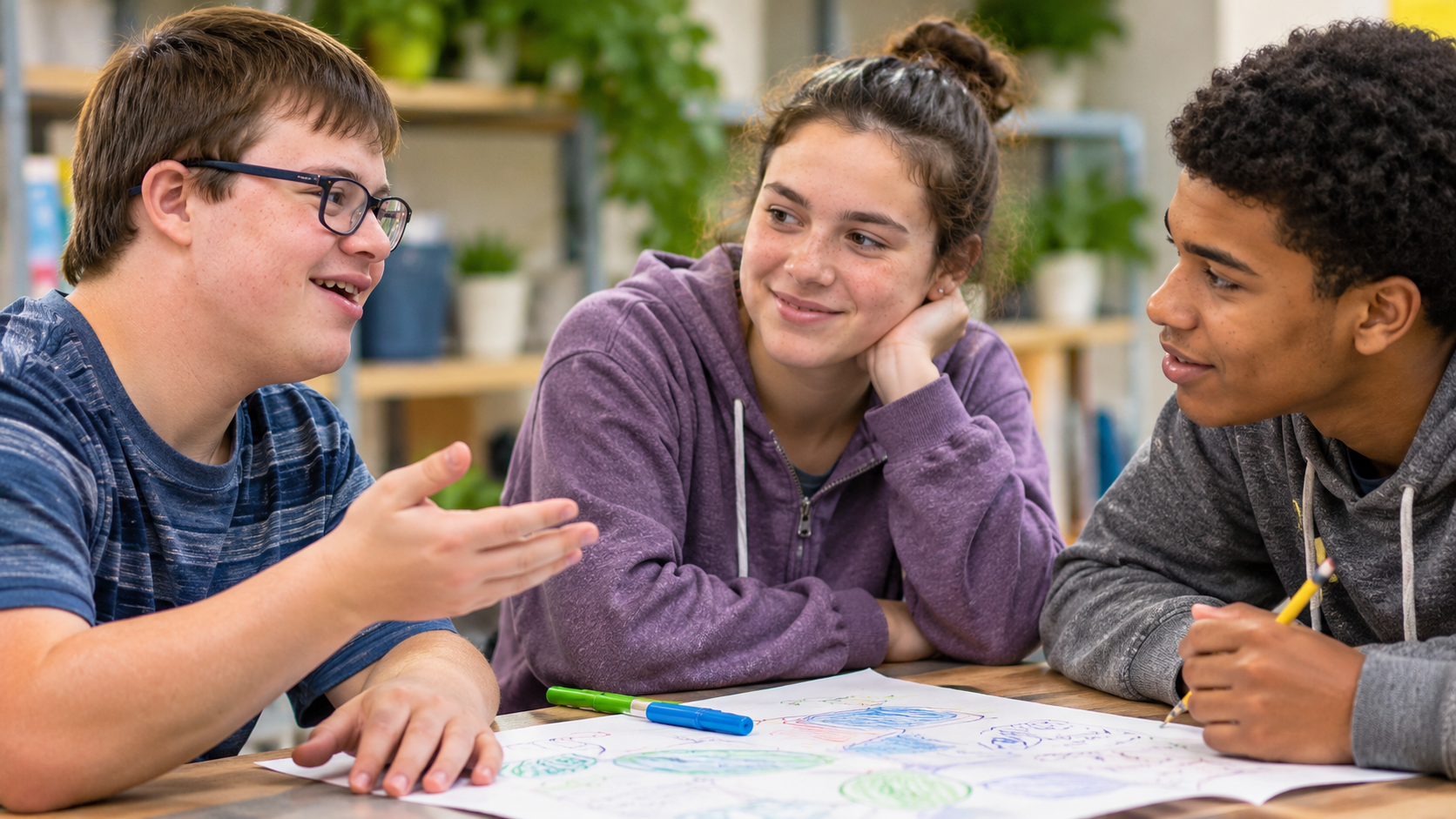
Conversations helps learners practice the many smaller skills involved in communicating and connecting with other people.
Social Awareness focuses on understanding social situations, facial expressions, body language, social cues, perspective taking, relationships, and the people around us.
Self Management helps learners practice flexibility, coping skills, dealing with change, personal responsibility, and navigating everyday challenges.
Self Advocacy supports learners in better understanding themselves, expressing needs, asking for help, navigating relationships, and speaking up when something doesn’t feel right.
You can learn more about WonderKids and the approach behind the program before deciding whether it might be a good fit for the person you care about. The site also explains how WonderKids can be used at home, alongside other services, in schools, during transition planning, with caregivers, or independently when a learner is ready.
Choosing Social Skills Resources for Children With Autism
There probably isn’t one resource that will be perfect for every learner.
That’s okay.
When you’re comparing social skills resources for children with autism, I think the better question is whether the resource gives your learner meaningful opportunities to actually build skills.
Does it break larger ideas into manageable pieces?
Does it show the skill instead of only talking about it?
Can your learner practice?
Can they repeat something without feeling rushed?
Can the family participate?
Can you connect the learning to things happening in everyday life?
And perhaps most importantly, does the resource respect who your learner already is while giving them more tools for navigating the world around them?
Those are questions worth asking.
See If WonderKids Is Right for Your Family
If those are the kinds of things you’ve been searching for, take some time to explore WonderKids.
You can watch a WonderKids lesson in action before making a decision. You’ll get a chance to see the teaching, visual supports, real world examples, activities, and repetition for yourself.
When you’re ready, you can explore the WonderKids learning options and choose an individual module or the complete curriculum.
You don’t have to work on everything at once.
Start with a skill that matters today.
See it.
Practice it.
Revisit it.
Then look for the moment when that skill shows up in real life.
Because finding a resource is only the beginning.
What matters is helping a learner turn what they are learning into something they can use.