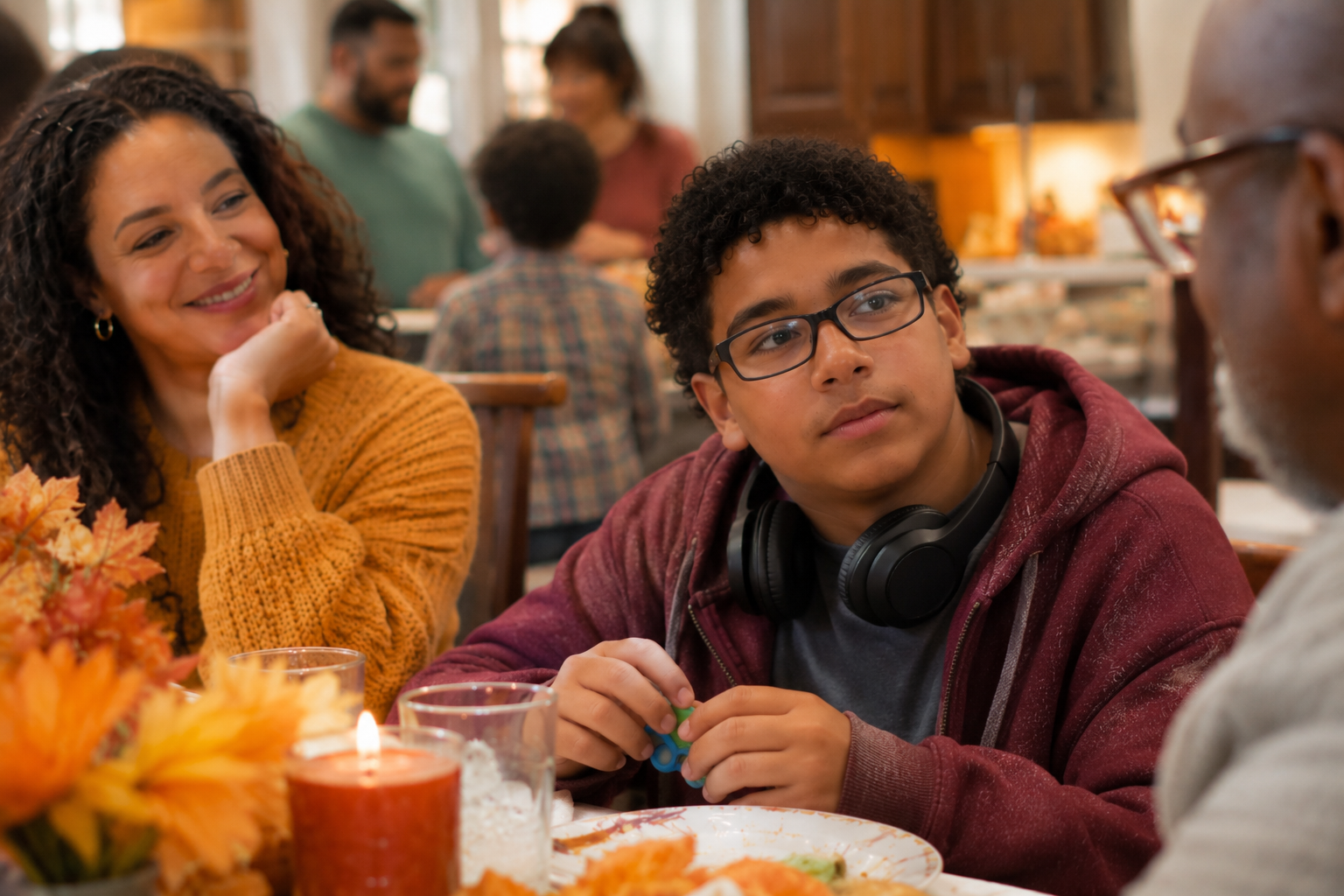
When your child struggles at family gatherings, holidays like Thanksgiving can bring an entirely different set of concerns. While these occasions are supposed to be a time for family, celebration, and making memories, they can also introduce unfamiliar routines, social expectations, and situations that feel overwhelming.
Will my child feel comfortable around relatives they haven’t seen in months? What happens if plans change? Will they be expected to join conversations, try unfamiliar foods, or participate in activities that feel overwhelming?
If you’ve found yourself asking these questions, you’re certainly not alone.
For children with autism, developmental disabilities, or social communication differences, family gatherings can present challenges that aren’t always obvious to others. Understanding why these situations can be difficult is an important first step toward helping your child participate in ways that feel comfortable and meaningful.
And while we can’t prepare for every situation, there are social-emotional learning activities families can use to help children develop skills they can practice throughout the year.
Why Your Child Struggles at Family Gatherings
Think about everything that can change during a family celebration.
The house may be crowded. Relatives might arrive unexpectedly. Familiar routines are interrupted. Conversations happen all around the room, sometimes with several people talking at once.
Even the smallest details can feel different. Dinner might be served later than usual. The foods may be unfamiliar. Someone may expect a hug, ask a question, or encourage your child to join an activity.
For a child who benefits from predictability, these experiences can require a great deal of effort.
And what looks like refusing to participate may actually be a child trying to manage an unfamiliar or overwhelming situation.
It’s important to recognize that struggling with family gatherings doesn’t necessarily mean your child doesn’t enjoy being around family. They may genuinely want to participate but need additional support to understand expectations, communicate their needs, or manage the demands of the environment.
Five Ways to Help When Your Child Struggles at Family Gatherings
Fortunately, there are practical steps families can take before, during, and after a gathering. These strategies can help make social situations more predictable while giving children opportunities to practice important skills.
1. Talk About What to Expect Ahead of Time
One of the most helpful things you can do is prepare your child for what the gathering might look like.
Talk about where you’re going, who will be there, and what activities might happen.
For example, you might explain:
- We’re going to Grandma’s house for Thanksgiving dinner.
- Your cousins and a few other relatives will be there.
- We’ll probably eat together and spend some time visiting.
- If you need a break, we’ll find somewhere quiet.
- We’ll let you know before it’s time to leave.
Pictures, schedules, or familiar reminders may also help.
Of course, not everything will go according to plan. That’s why it can be helpful to discuss what might change and reassure your child that you’ll work through those changes together.
2. Practice Social Skills When Your Child Struggles at Family Gatherings
Sometimes children know what they want to say but aren’t sure how to begin.
They might feel uncomfortable greeting a relative, joining a conversation, answering questions, or asking to participate in an activity.
When your child struggles at family gatherings, practicing these situations ahead of time can help make them more familiar.
For example, you might practice different ways to greet someone, including saying hello, waving, or using another form of communication your child prefers.
You could also explore questions relatives might ask, such as what they’ve been doing at school or what activities they enjoy.
These are examples of social skills for kids that can be introduced and practiced in comfortable, familiar settings.
The goal isn’t to rehearse every conversation or expect a particular response. Instead, it’s to help your child recognize that there are different ways to communicate and participate.
3. Support Your Child’s Needs at Family Gatherings
Family gatherings can be exciting, but they can also be exhausting.
Loud conversations, unfamiliar smells, crowded rooms, and changes in routine can create sensory and emotional demands that build throughout the day.
For some children, having a quiet space available can make a meaningful difference.
Consider identifying a place where your child can step away, enjoy a familiar activity, or spend a few minutes without the expectations of social interaction.
It’s also helpful to offer choices whenever possible.
Perhaps your child would prefer sitting beside a familiar family member, participating in one activity instead of several, or eating foods they already enjoy.
Being flexible doesn’t have to mean asking a child to tolerate every unfamiliar experience. Sometimes it means adjusting the environment and expectations so the child can participate comfortably.
The National Autistic Society’s guidance for holidays and celebrations also emphasizes preparing for changes, considering sensory needs, and making room for different ways of participating.
These approaches can be helpful during Thanksgiving, birthdays, family reunions, and other celebrations.
4. Help Your Child Communicate What They Need
One of the most important skills children can develop is learning to communicate their needs, preferences, and boundaries.
At a family gathering, that might mean asking for a break, saying they don’t want a hug, requesting help, or letting someone know that an activity feels uncomfortable.
For some children, these requests come naturally. Others may benefit from practicing the words, gestures, or communication tools they can use.
For example, a child might practice saying:
- “Can I take a break?”
- “I don’t want to play right now.”
- “Can you help me?”
- “I’d rather wave hello.”
These are valuable self-advocacy skills that can support children in many different environments.
It’s equally important for adults to respect those requests. When children learn that communicating their needs leads to understanding and support, they have more opportunities to build confidence in speaking up for themselves.
5. Recognize Progress Without Expecting Perfection
It’s easy to picture what a successful family gathering should look like.
Everyone sits together for dinner. Children play with their cousins. Relatives catch up, conversations flow, and everyone participates in the celebration.
But meaningful participation doesn’t have to look the same for every child.
Perhaps your child greets one relative when they arrive. Maybe they join a game for a few minutes or communicate that they need some quiet time.
Those moments matter.
Rather than measuring success by how long your child stays at the table or how many people they talk to, consider the opportunities they had to participate, make choices, and communicate.
And if the day doesn’t go as planned, that’s okay, too. Families can reflect on what was challenging, what helped, and what they might approach differently next time.
How Social Emotional Learning Activities Help With Family Gatherings
Preparing for a holiday celebration is helpful, but social-emotional learning doesn’t need to happen only when an event is approaching.
In fact, some of the most meaningful opportunities for learning happen during ordinary moments at home.
Children can practice starting conversations during family activities, recognizing emotions when plans change, or expressing preferences when making everyday decisions.
These experiences give families opportunities to introduce skills in familiar settings before children encounter similar situations elsewhere.
For example, a child who practices asking for a break at home may become more familiar with communicating that need during a busy family gathering.
Likewise, a child who explores different ways to join conversations may feel more prepared when an opportunity arises with relatives or classmates.
Learning a skill is one part of the process. Having opportunities to practice it in everyday life is another.
And that’s where structured learning resources can provide additional support.
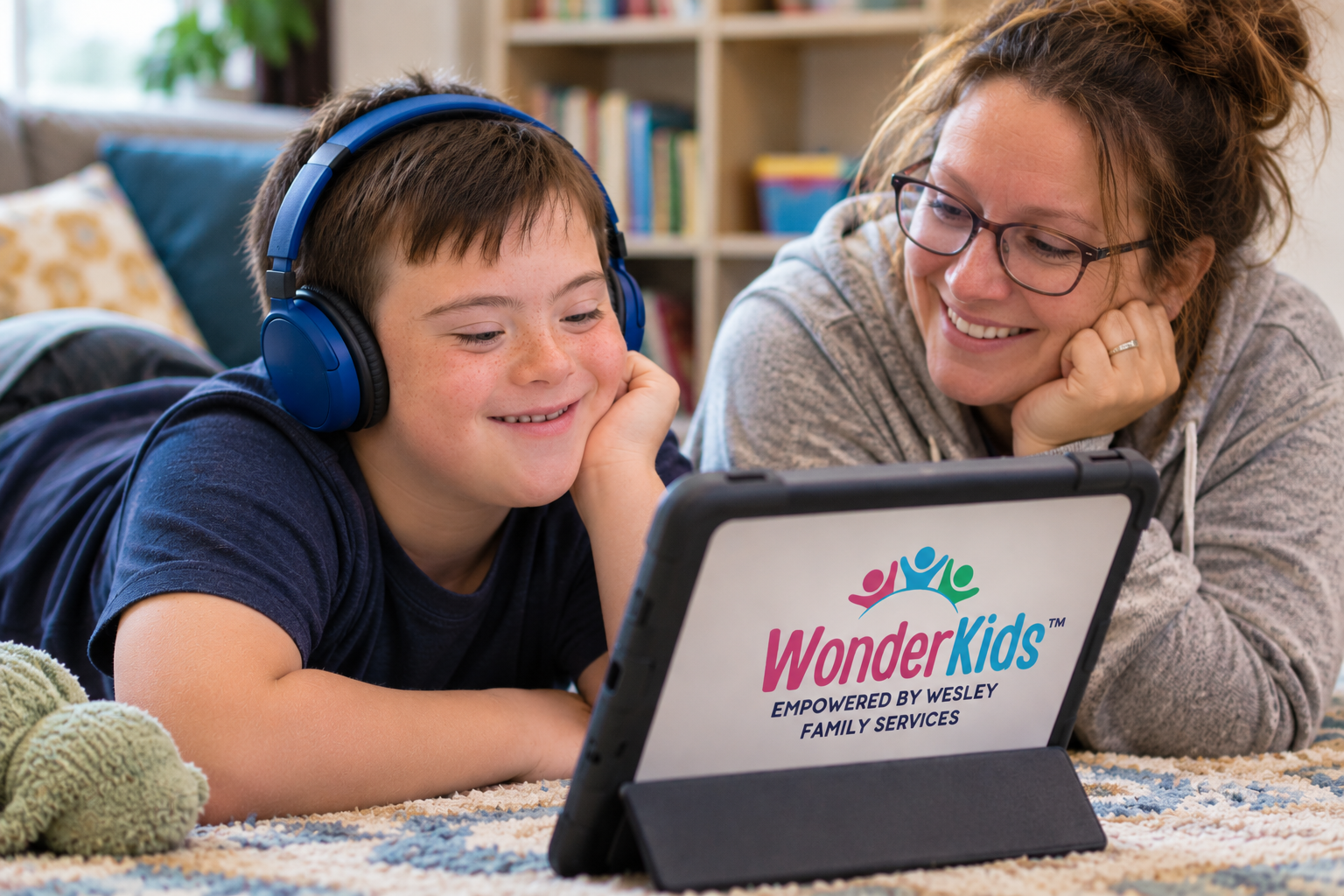
How WonderKids Digital Supports Social Skills Practice at Home
At WonderKids Digital, we recognize that important social-emotional skills often require more than a single explanation or conversation.
Children may benefit from seeing a skill demonstrated, exploring different responses, and returning to familiar examples as they continue learning.
That’s why WonderKids Digital uses animated instruction, real-world scenarios, interactive activities, and repeated opportunities for practice.
The program is organized into four connected learning areas that can support skills relevant to family gatherings and many other everyday experiences.
Conversations introduces skills such as starting conversations, joining discussions, listening, and responding to others. These are skills children may use when interacting with relatives, friends, or classmates.
Social Awareness helps learners explore social situations, recognize cues, and consider different perspectives. This can support understanding of the interactions and expectations they encounter in everyday life.
Self-Management focuses on recognizing emotions, developing coping strategies, and handling changes or challenging situations.
Self-Advocacy supports learners in expressing their needs, communicating preferences, and making decisions that are meaningful to them.
These are not lessons specifically about Thanksgiving dinner or holiday celebrations. Instead, they introduce skills that can be useful across many different situations.
Online SEL Lessons Children Can Revisit Again and Again
One of the things I particularly appreciate about WonderKids Digital is the opportunity for repetition.
Children aren’t expected to understand or master a new skill after seeing it once.
With WonderKids Digital, families can pause lessons, revisit examples, and return to activities as often as needed during their subscription.
For instance, a family might explore a lesson about joining conversations, talk about the examples together, and practice a similar interaction at home.
Later, when another opportunity comes along, they can return to the lesson and reinforce what they’ve learned.
The same approach can apply to recognizing emotions, managing frustration, understanding social situations, or asking for help.
Because these online SEL lessons are available at home, families can choose when and how to incorporate learning into their routines.
There isn’t a requirement to complete everything at once. The focus can remain on skills that are relevant to the child and the situations they’re experiencing.
Helping Your Child Feel More Prepared for Future Family Gatherings
As we move through Thanksgiving and the holiday season, I hope families remember that a successful gathering doesn’t have to look like everyone else’s.
Sometimes the most meaningful moments are small ones.
A child communicates that they need a break. A relative understands why a hug isn’t comfortable. A family adjusts its plans so everyone has an opportunity to participate.
And sometimes, the most important thing we can do is recognize that a child is trying, even when the experience is difficult.
The next family gathering might be a birthday, a summer picnic, or another holiday celebration. Between now and then, there will be many opportunities to introduce new skills, revisit familiar concepts, and practice together.
When your child struggles at family gatherings, we can’t promise that every future experience will be easier. But we can continue giving children opportunities to learn, communicate, and participate in ways that work for them.
If you’re looking for additional ways to support social-emotional learning at home, Take a Look Inside WonderKids Digital to see how our lessons work.
You can also explore the WonderKids Digital curriculum and purchasing options to find learning opportunities that fit your family’s needs.
Because meaningful progress doesn’t happen only during the holidays. It happens through the everyday opportunities we create to learn, practice, and grow.